
Buy Custom Frameless Acrylic Wall Art: A Complete Guide

Table of Contents
- What Makes Frameless Acrylic Wall Art Different
- Select the Best Photos for Acrylic Prints
- Acrylic Wall Art Sizing Guide for Your Space
- How to Hang Acrylic Wall Art Securely
- How to Clean and Care for Acrylic Wall Art
- The Ordering Process: From Upload to Delivery
- Why Acrylic Outperforms Other Wall Art Materials
- Frequently Asked Questions
Last Updated: October 14, 2026
What Makes Frameless Acrylic Wall Art Different
Frameless acrylic wall art represents a shift away from traditional framed prints, canvas, and glass displays. The difference lies in how the image is created and mounted. Instead of printing on paper and placing it behind glass or canvas, UV printing directly onto optical-grade acrylic glass eliminates the layers entirely.
At acrylic.studio, we've refined this process to deliver artwork that appears to float off your wall. The polished edges and hidden mounting hardware create a seamless, modern aesthetic that transforms any room. This approach solves several problems that plague traditional wall art: glare from overhead lighting, dust accumulation between layers, and the dated look of heavy frames.
The clarity of optical-grade acrylic is exceptional. Light passes through the material without distortion, so your image maintains its vibrancy from any angle. Unlike glass, acrylic won't shatter if bumped or shifted during moving. Unlike canvas, it resists fading and doesn't absorb dust or moisture.
Select the Best Photos for Acrylic Prints
Not every photo works equally well on acrylic. The medium amplifies both strengths and weaknesses in your image. A sharp, well-lit photo will look stunning. A blurry phone snapshot blown up to 24 inches will show every flaw.
The key is understanding what acrylic does to your image. The material adds depth and luminosity, colors appear more vibrant, and details pop. This means you want photos with strong contrast, rich colors, and clear subjects. Landscape photography, portraits with good lighting, and high-contrast graphics all excel on acrylic.
Image Resolution and File Requirements
Resolution is where most people stumble. Your Design, Your Sign accepts custom uploads, but the image quality depends on what you're starting with. For best results, aim for images at 150 DPI or higher at your final print size. That means a 24×36 print should be roughly 3,600×5,400 pixels.

If your photo is from a smartphone, check the file size and dimensions before uploading. Modern phones capture high-resolution images by default, so most recent photos will work. Older or compressed images may pixelate when enlarged. A simple test: zoom into your photo on your computer screen at 100% magnification.
File format matters too. JPG and PNG files work best. Avoid heavily compressed images or screenshots, which lose detail. If you're uncertain about resolution, acrylic.studio's preview tool lets you see how your image will look at your chosen size before you order.
Photo Content That Shines on Acrylic
Certain subjects naturally suit the acrylic medium. High-contrast black-and-white photography looks exceptional because the material enhances the depth between light and dark. Color photography with saturated tones, think landscape sunsets, vibrant product shots, or bold graphics, translates beautifully.
Portraits work well when the subject is well-lit and sharp. Soft, blurry backgrounds create a sense of depth that acrylic amplifies. Architectural photography and minimalist designs also perform excellently because the clean lines and clarity of acrylic complement geometric compositions.
Avoid overly busy images with fine details that disappear at larger sizes. Avoid low-contrast photos or images taken in poor lighting. If you're planning a gym or office display, consider how the image will look under artificial lighting. Acrylic's glare-free surface means overhead lights won't wash out your design, but the image itself should still hold up under those conditions.
Acrylic Wall Art Sizing Guide for Your Space
Size determines impact. A frameless acrylic print that's too small disappears on a large wall. One that's too large overwhelms a compact room. The goal is proportional balance.
Standard Sizes vs. Custom Dimensions
Standard sizes, 8×10, 11×14, 16×20, 24×36, offer convenience and predictable pricing. They fit common wall spaces and work with most interior layouts. If your wall follows typical proportions, a standard size usually works.
Custom dimensions give you precision. If you have an awkward wall space, an odd-shaped alcove, or a specific vision, custom sizing solves it. Your Design, Your Sign accepts any dimensions you choose. This flexibility means you're not forced into a size that doesn't quite fit your space.
The trade-off is minimal. Custom sizing is part of the made-to-order process. The advantage is that your artwork fits your wall exactly, not approximately.
Placement and Room Proportion
The rule of thumb: your artwork should occupy 50-75% of the wall space where you're hanging it. Measure the wall area where you plan to display the piece. If you have a 4-foot wide wall section, an 18-24 inch wide print works well. For a larger wall, go bigger.
Consider viewing distance too. Artwork in entryways and living rooms where people stand 6-10 feet away can handle larger sizes. Bedroom pieces viewed from 3-5 feet away can be smaller. Gym or office displays meant to be seen from across the room benefit from larger dimensions.
Vertical orientation suits narrow walls and hallways. Horizontal orientation works better for wide walls above furniture. If you're uncertain, sketch the dimensions on your wall with painter's tape first. Live with the outline for a day and see how it feels.
How to Hang Acrylic Wall Art Securely
Mounting frameless acrylic properly ensures your piece stays secure and maintains that floating appearance. The hardware is minimal and hidden, which is part of the appeal.
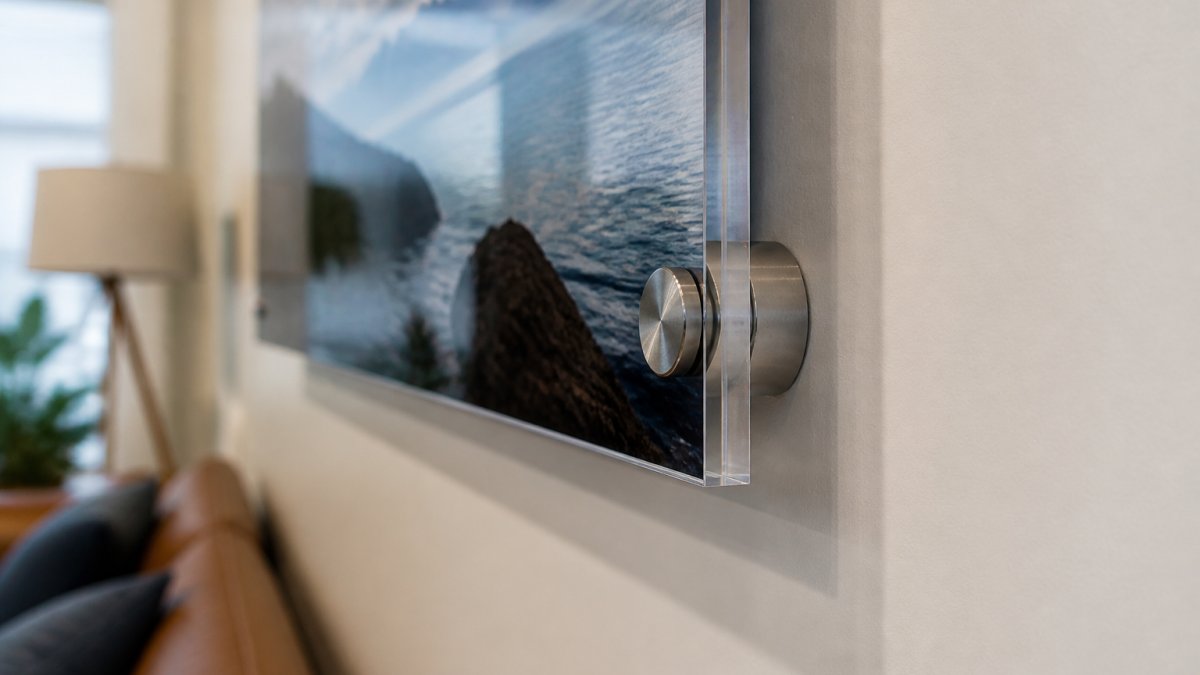
Mounting Hardware and Wall Compatibility
Your Design, Your Sign ships with standoff hardware designed for drywall. The standoffs attach to your wall studs or heavy-duty anchors, then the acrylic piece mounts onto the protruding posts. This creates the floating effect, the acrylic appears to hover from the wall.
Drywall is ideal for this mounting system. If you have plaster, concrete, or tile, you'll need different anchors. Concrete and tile require masonry bits and anchors. Plaster needs special anchors that won't crack the material. Check your wall type before ordering to ensure you have the right hardware on hand.
Renters should note: standoff mounting requires drilling holes. If your lease prohibits holes, you have options. Command strips and adhesive mounting systems exist, though they don't provide the same floating effect. Always check your lease and get landlord approval before drilling.
Installation Without Damage
Start by locating studs using a stud finder. Studs provide the strongest anchor point and are preferred for larger pieces. Mark the stud locations with painter's tape.
Measure twice. Use a level to mark your mounting points. Uneven placement is the most common installation mistake. Take time to get the horizontal line absolutely level.
Drill pilot holes slightly smaller than your anchors. This prevents the wall from cracking and makes anchor insertion easier. Install anchors or studs according to the hardware specifications. Attach the standoffs to the anchors. Finally, carefully lift your acrylic piece and slide it onto the standoffs.
If you're uncertain about installation, many hardware stores offer mounting services.
How to Clean and Care for Acrylic Wall Art
Acrylic is low-maintenance, but proper care extends its life and keeps it looking pristine.
Dust regularly with a soft, dry microfiber cloth. This prevents dust from settling into any crevices or around the edges. Weekly dusting is ideal for high-traffic areas like gyms or offices.
For fingerprints or smudges, use a slightly damp microfiber cloth. Avoid harsh chemicals, window cleaners, or abrasive materials. These can scratch the acrylic surface or damage the UV-printed image. Plain water and a soft cloth are sufficient for most cleaning needs.
Acrylic is naturally resistant to fading, but direct sunlight over years can gradually fade any printed material. If your piece hangs in a sun-exposed location, consider UV-protective window treatments or periodic rotation to minimize exposure.
The polished edges don't require special care. They're sealed during production and won't yellow or degrade. The mounting hardware is stainless steel, so it resists rust and corrosion.
The Ordering Process: From Upload to Delivery
Understanding the ordering workflow removes uncertainty and helps you plan around production timelines.
Uploading and Previewing Your Design
The process starts with uploading your image. Your Design, Your Sign accepts JPG and PNG files. Once uploaded, you'll see a preview of how your image looks at your chosen size and dimensions.
This preview step is crucial. You can see exactly how your photo will appear on acrylic before committing. If the preview doesn't match your expectations, if the image looks pixelated, colors seem off, or framing feels wrong, you can adjust your dimensions, crop the image, or choose a different photo entirely.
Take time with this step. The preview is accurate and represents what you'll receive. If it looks good on screen, it will look good on your wall.
Production Timeline and Shipping
Your Design, Your Sign is made to order. Once you finalize your design, production begins. Most orders ship within 1-2 weeks.
Shipping is handled carefully. Acrylic pieces are packaged to prevent damage in transit. Tracking information is provided so you know when to expect delivery. If your piece arrives damaged, acrylic.studio stands behind the quality and will work with you on a replacement.
Plan ahead if you have a specific deadline. Ordering with 3 weeks' lead time provides a comfortable buffer for production and shipping.
Why Acrylic Outperforms Other Wall Art Materials
Comparing acrylic to alternatives clarifies why this medium has become the choice for serious wall art.
Acrylic vs. Canvas: Canvas absorbs dust and moisture, requiring protective coatings. Colors fade over time, especially in sunlit rooms. Acrylic resists both.
Acrylic vs. Framed Prints: Framed glass reflects light and creates glare. Acrylic is optically clear and glare-free. Frames add weight and bulk. Acrylic is lightweight and minimal.
Acrylic vs. Metal Prints: Metal prints are durable and heavy. They require specialized mounting. Acrylic offers similar durability with simpler installation. Metal can show fingerprints and requires specific cleaning methods.
Acrylic vs. Posters: Posters fade quickly and require framing to look finished. Unframed posters curl and wrinkle. Acrylic prints are permanent, colorfast, and look polished without additional framing.
The combination of durability, clarity, ease of care, and modern aesthetics makes acrylic the superior choice for anyone serious about wall art.
Choosing the right wall art involves understanding your space, your image quality, and what each material actually delivers. Frameless acrylic wall art solves the problems that plague other mediums while delivering a sophisticated, modern look that works in homes, gyms, offices, and professional environments.
Frequently Asked Questions
What image resolution do I need for a high-quality acrylic print?
Aim for 150+ DPI (dots per inch) at your final print size. For example, an 18×24 inch print needs roughly 2700×3600 pixels. Smartphone photos typically work for smaller prints (under 12 inches), but larger sizes benefit from higher-resolution images. When you upload to acrylic.studio, you'll preview the image at your chosen size before ordering, so you can see exactly how it will look.
Can I use my phone camera photos for a large frameless acrylic wall art piece?
Yes, but size matters. Phone photos work well for prints up to about 12×16 inches. Beyond that, pixelation becomes visible. If you want a larger piece, consider having a professional photographer shoot the image, or choose a phone photo with bold colors and simple composition that holds up when enlarged. The preview tool lets you check before you commit.
How long does it take to receive my custom acrylic wall art after ordering?
Production times vary, but most orders ship within 1-2 weeks. Made-to-order means each piece is crafted specifically for you, ensuring quality over speed.
Will frameless acrylic wall art work in a bright room or gym with overhead lights?
Yes. UV-printed acrylic eliminates the glare you get with glass or traditional framed prints. The optically clear acrylic and direct printing method mean light passes through and reflects the image without washing it out. This makes frameless acrylic ideal for gyms, offices, and bright commercial spaces where glare is a concern.