
Does Acrylic Wall Art Fade in Sunlight?

Table of Contents
- Does Acrylic Wall Art Fade in Sunlight?
- How Sunlight and UV Radiation Damage Acrylic Wall Art
- UV Protection for Acrylic Prints: What Actually Works
- Where Not to Hang Pictures to Avoid Sun Damage
- How Long Do Acrylic Prints Last Without Fading?
- How to Protect Wall Art from Sunlight Exposure
- Acrylic Wall Art vs. Other Print Types: Fade Resistance
- Frequently Asked Questions
Last Updated: October 16, 2026
Does Acrylic Wall Art Fade in Sunlight?
Yes, acrylic wall art can fade in sunlight, but how much depends on how it's made, where it hangs, and what protection you use. UV rays and intense visible light break down pigments over time.
The good news: acrylic wall art fades much more slowly than paper prints or canvas, and with the right placement and care, it stays vibrant for years.
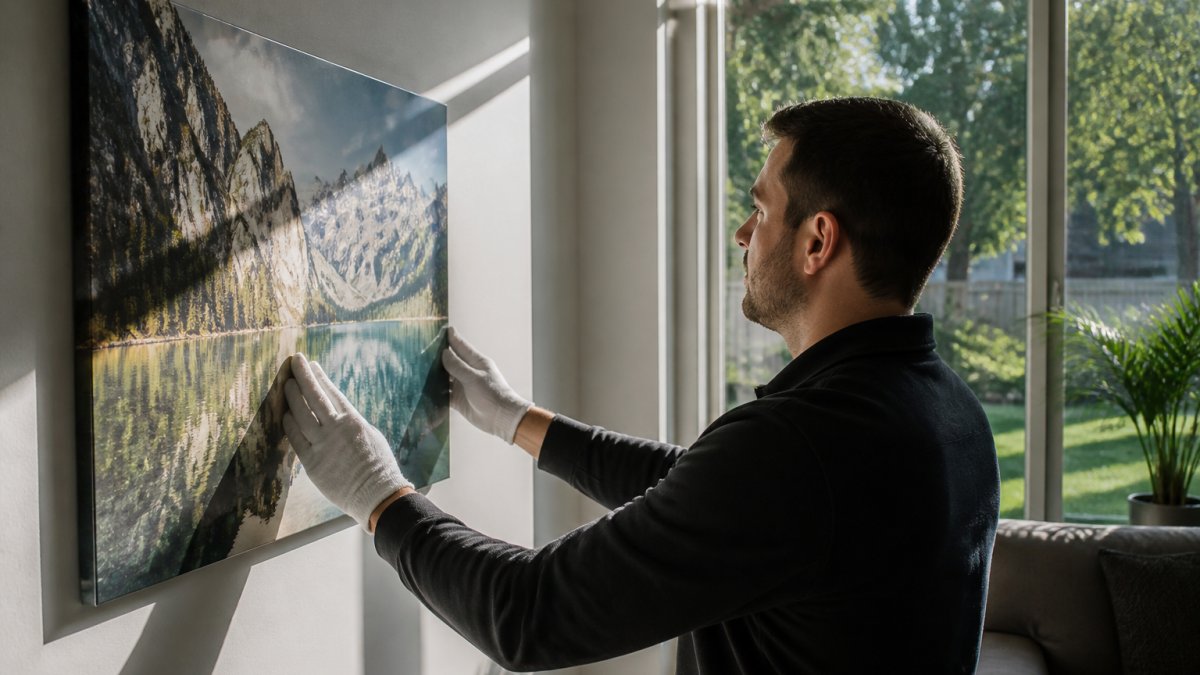
How Sunlight and UV Radiation Damage Acrylic Wall Art
Sunlight contains ultraviolet radiation and visible light. Both damage artwork, but UV rays are the primary culprit: they break down the chemical bonds in pigments, causing colors to fade. Organic pigments (carbon-based compounds) are especially vulnerable, and continuous exposure leaves the image washed out or pale.
Visible light also causes damage. Even without UV rays, intense visible light can fade certain colors, particularly reds and yellows, and some indoor spaces get bright, indirect sunlight all day long.
The damage is cumulative and irreversible: once a pigment breaks down, you can't restore it. That's why placement and protection matter so much.
Factors that speed up fading:
- Direct sunlight through south-facing windows
- Proximity to windows (closer = faster fading)
- High-intensity indoor lighting (like overhead LEDs in offices or gyms)
- Geographic location (areas with stronger UV index)
- Length of daily exposure
UV Protection for Acrylic Prints: What Actually Works
Before comparing protection methods, separate the two things "acrylic wall art" can mean, because they fade for different reasons.
Acrylic paint is pigment suspended in an acrylic polymer binder. The binder makes the paint flexible and water-resistant but does not block ultraviolet radiation, so its pigments fade when UV and high-energy visible light break their chemical bonds.
Acrylic glazing (or acrylic-faced art) is a clear acrylic sheet mounted in front of a print or bonded to it. Standard optical-grade acrylic transmits most UV radiation; UV-filtering acrylic is made with additives that absorb UV before it reaches the ink layer beneath.
Most frameless UV-printed acrylic wall art uses the second meaning: a rigid acrylic panel with the image reverse-printed and backed with a white layer. The acrylic face is the shield; the inks are the vulnerable part.
How each protection method actually works
UV-filtering acrylic glazing. Manufacturers add UV absorbers to the acrylic resin during production. These absorbers capture UV photons and dissipate them as trace heat before they reach the print. Quality UV-filtering acrylic is commonly rated to block the large majority of UV radiation in the 300-400 nanometer range.
UV-protective coatings and varnishes. Clear liquid films applied over a print or painting, they absorb UV at the surface. They suit canvas and acrylic paintings but are less relevant for frameless acrylic wall art, where the panel is already the front surface.
UV-blocking window film. Applied to the glass, not the art, it reduces UV transmission and is a reasonable retrofit when a piece must hang near a window. It does not stop visible-light fading or protect against heat buildup.
Standard glass or standard acrylic. No UV additives, no meaningful UV protection. A frame alone does not solve the problem.
What UV protection does not do
UV filtering is not a force field. It reduces one damage pathway but does not stop fading from intense visible light, especially violet and blue wavelengths, which can degrade certain pigments over years. It also does not stop heat, humidity swings, or physical damage to the acrylic surface.
A common industry pattern is advertising "UV protection" without specifying wavelength range or transmission percentage. If a product page states no UV-blocking figure, treat the claim as unverified.
Matching protection to the piece
For faith and motivational signs in bright rooms, the practical stack is UV-filtering acrylic from the start, placement out of direct sun, and window film or blinds if the wall faces a window. For a piece like Go Anyway in a home office with a south-facing window, that combination keeps the Joshua 1:9 text crisp for years rather than months. For a gym wall with overhead lighting, Discipline First benefits from the same UV-filtering face even though the light is artificial.
Where Not to Hang Pictures to Avoid Sun Damage
Placement is everything: where you hang your acrylic wall art determines how much light it receives and how fast it fades.
Avoid direct sunlight completely. A piece in the path of direct sun for several hours a day fades noticeably within months.
Indirect sunlight is safer, but not risk-free. A wall that gets bright, indirect sunlight all day still exposes your art to significant light. It's slower than direct sun, but fading happens over time.
High-traffic commercial spaces need extra caution. Offices and gyms often have bright overhead lighting, and constant exposure adds up fast. Combine UV-filtering acrylic with placement away from the brightest areas.
Interior walls away from windows are ideal. These spaces get ambient light but no direct sun, so your acrylic wall art lasts much longer.
Hallways and entryways are good options. These spaces typically have moderate, consistent lighting without direct sun.
How Long Do Acrylic Prints Last Without Fading?
There is no single lifespan number, because fading is a function of cumulative light exposure, not calendar time. Two identical prints hung ten feet apart can age at very different rates.
The variables that actually drive fading
Window orientation. In the northern hemisphere, south-facing windows receive the most direct sun across the day, followed by west-facing windows in the afternoon. North-facing windows deliver mostly indirect light.
Distance from the window. Light intensity falls off quickly with distance.
Hours of direct sun per day. A wall that catches two hours of direct sun is a different risk category than one that catches six.
Glazing type. UV-filtering acrylic removes most UV but not visible light; standard acrylic removes almost none of either. This is the biggest material variable you control at purchase.
Ink and pigment quality. UV-curable inks used in professional UV printing are formulated for outdoor and architectural applications and hold color better than the dye-based inks in cheap poster printing.
Indoor lighting. High-output LEDs and fluorescent fixtures emit small amounts of UV and significant visible light.
Rough risk tiers (not guarantees)
These are patterns, not promises; actual results depend on your space.
- Low risk: interior wall, no direct sun, UV-filtering acrylic, moderate ambient light. Most pieces show little visible change for many years.
- Moderate risk: bright indirect light all day, or a few hours of filtered sun, UV-filtering acrylic. Slow color shift may become noticeable over years.
- High risk: direct sun for several hours daily, standard acrylic without UV filtering, or constant high-output commercial lighting. Noticeable fading can appear within a year or less.
A simple at-home assessment
You can estimate your risk in about ten minutes.
- Watch the wall for a day. Note when direct sun hits the surface and for how long.
- Check the product spec. Look for a stated UV-blocking percentage and wavelength range. If neither is listed, assume standard acrylic.
- Photograph the piece now. Take a well-lit photo in consistent lighting as your baseline.
- Re-photograph every six to twelve months. Compare side by side; fading is gradual and easy to miss without a reference.
- Check the back and edges. Yellowing of the acrylic or a shift in the white backing layer can signal light or heat damage before the printed colors visibly change.
Why the material matters less than the placement
A premium UV-printed acrylic piece in a dark hallway will outlast a cheap print in a sunroom. The material sets the ceiling; placement determines how fast you approach it. For pieces meant for bright, high-traffic spaces, like Locked In in a locker room or Three Moves Ahead in a founder's office, plan the wall first.
How to Protect Wall Art from Sunlight Exposure
You have several options to extend the life of your acrylic wall art, from simple to more involved.
1. Use UV-filtering acrylic from the start. This is the most important choice you make when ordering.
2. Position your art away from direct sun. Choose an interior wall or a spot without direct window exposure.
3. Install UV-protective window film. If a piece must hang near a window, UV-blocking window film reduces UV transmission significantly.
4. Use sheer curtains or blinds. These filter light without blocking it completely. Your art stays visible but gets less intense exposure.
5. Rotate your pieces occasionally. Rotating multiple acrylic wall art pieces between sunny and interior spots balances exposure over time.
6. Clean your acrylic carefully. Dust and debris can trap moisture and speed degradation.
**7.
Acrylic Wall Art vs. Other Print Types: Fade Resistance
How does acrylic wall art compare to other materials? These differences help you choose.
Acrylic wall art resists fading better than paper or canvas because the pigments are embedded in a durable, protective material.
Paper prints fade quickly in sunlight. Paper is porous and offers no protection, so UV rays hit the pigments directly.
Canvas prints fall in the middle. Canvas is durable, but pigments sit on or just below the surface where UV rays reach them easily.
Metal prints are very fade-resistant because the image is embedded into the metal surface.
Framed artwork gets some protection from the glass or acrylic in the frame, but standard glass blocks less UV than specialized UV-filtering glass.
The acrylic advantage: Acrylic wall art combines durability with UV protection potential.
Sunlight will eventually fade any artwork, but you control how fast.
At acrylic.studio, we use UV-printed directly onto optical-grade acrylic glass, which eliminates glare and paper, resulting in vibrant, durable artwork. Whether you're hanging a faith-based piece like Go Anyway in your home office, a motivational sign like Discipline First in your gym, or a custom photograph in your living room, the right material and placement make all the difference.
Frequently Asked Questions
Does acrylic wall art fade in direct sunlight?
Acrylic wall art can fade in direct sunlight, but the rate depends on the quality of UV inks and acrylic glazing used. Direct, unfiltered sunlight accelerates color loss more than indirect exposure. UV-printed acrylic artwork with quality inks resists fading longer than paper-based prints, but no artwork is completely immune to light damage over extended periods.
How can you protect acrylic wall art from UV exposure?
Protect acrylic wall art by positioning it away from direct sunlight, using UV-filtering window film or UV-protective coatings on nearby windows, and installing curtains or blinds that block intense light during peak hours. UV-filtering acrylic glazing offers additional protection. Rotating artwork seasonally or moving pieces away from high-light areas during summer months also extends color life.
Is acrylic wall art more fade-resistant than paper prints?
Yes. Acrylic wall art is significantly more fade-resistant than paper prints because acrylic glazing provides a protective barrier and does not degrade like paper fibers do. UV-printed acrylic artwork combines durable inks with protective acrylic, while paper prints lack this structural defense. Paper can yellow, become brittle, and lose color faster under the same light conditions.
Can faded acrylic wall art be restored?
Fading in acrylic wall art is largely irreversible because the color loss occurs at the pigment level, not on the surface. Unlike framed artwork that can be re-glazed, UV-printed acrylic art cannot be easily restored. Prevention through proper placement and light management is far more effective than attempting restoration after fading occurs.